A study that measured grip strength in nearly 140,000 adults across 17 countries found that every 5-kilogram drop was linked to a 16% higher risk of dying from any cause during follow-up — a stronger association than systolic blood pressure showed in the same data. Grip strength itself follows a predictable arc: it typically peaks in your late 20s to 30s, holds roughly steady through midlife, and then declines — and by age 80, measurably weak grip is common, not rare.
| What researchers found | The detail |
|---|---|
| Death risk per 5 kg drop in grip strength | 16% higher all-cause mortality (Leong 2015, PURE study) |
| Grip strength vs. systolic blood pressure | Grip strength predicted all-cause and cardiovascular death more strongly, in the same cohort |
| Peak grip strength, men | About 51 kg, typically between ages 29 and 39 (Dodds 2014) |
| Peak grip strength, women | About 31 kg, typically between ages 26 and 42 (Dodds 2014) |
| Weak grip by age 80 | 23% of men and 27% of women fall into the "weak" range researchers defined |
What did the PURE study actually measure?
Leong and colleagues enrolled 139,691 adults aged 35 to 70 across 17 countries of varying income levels, as part of the Prospective Urban Rural Epidemiology (PURE) study. Each participant's grip strength was measured once at the start, with a handheld dynamometer, and then researchers tracked who died over a median of four years using death records. After adjusting for other factors, each 5-kilogram reduction in grip strength was linked to a 16% higher risk of death from any cause and a 17% higher risk of cardiovascular death, with smaller but still measurable increases in the risk of heart attack and stroke. The pattern held up similarly across low-, middle-, and high-income countries for most of these outcomes.
Is grip strength really a better predictor than blood pressure?
In the same analysis, the researchers directly compared the two: grip strength predicted all-cause and cardiovascular death more strongly than systolic blood pressure did. That doesn't mean grip strength causes the risk, or that blood pressure stops mattering — it means that, in this large observational dataset, a simple squeeze test carried more statistical information about who would go on to die than the number most people already get checked at every physical.
Grip strength wasn't a predictor of everything, either. The study found no meaningful association with diabetes, hospital admission for pneumonia or COPD, injury from falls, or fracture — the signal was specific to death, cardiovascular disease, heart attack, and stroke. One finding ran the opposite direction and doesn't fit the pattern: in high-income countries only, stronger grip was linked to a slightly higher rate of cancer, something the researchers didn't find in middle- or low-income countries and couldn't explain from this data. It's a flagged oddity in the paper, not a reason to want a weaker grip.
When does grip strength peak, and how fast does it decline?
Dodds and colleagues answered this by pooling 60,803 grip-strength measurements from nearly 50,000 people across 12 British population studies, spanning ages 4 to 90. The pattern: grip strength rises through childhood and adolescence, peaks in early adulthood, holds through midlife, and then declines. The median peak was about 51 kilograms for men, typically reached between ages 29 and 39, and about 31 kilograms for women, typically between 26 and 42. From there, the decline is gradual rather than sudden — but it adds up. By age 80, the researchers found measurably "weak" grip (defined as strength at least 2.5 standard deviations below the peak average for that sex) in 23% of men and 27% of women.
What the research says
Leong and colleagues, following 139,691 adults across 17 countries for a median of 4.0 years, found each 5-kilogram reduction in grip strength associated with a 16% higher risk of all-cause mortality (hazard ratio 1.16, 95% CI 1.13–1.20) and a 17% higher risk of cardiovascular mortality (HR 1.17, 95% CI 1.11–1.24), with smaller associations for heart attack and stroke — and reported grip strength as a stronger predictor of all-cause and cardiovascular death than systolic blood pressure in the same cohort.¹ Dodds and colleagues, pooling 60,803 measurements from 49,964 participants across 12 British studies, established that grip strength peaks in the late 20s to 30s and declines from midlife onward, with measurably weak grip present in 23% of men and 27% of women by age 80.²
Two limits apply. The PURE study measured grip strength once and followed people forward for a median of just four years — long enough to detect a strong statistical association, but not to prove that losing grip strength itself causes death, rather than reflecting an underlying illness that weakens the hand and shortens life at the same time. And the British studies behind the peak-and-decline figures are cross-sectional measurements pooled across different decades and, in some cases, different dynamometer models — though the researchers' own sensitivity analyses found the overall pattern held regardless of equipment or whether people were seated or standing.
What you can do this week
- Get a real baseline, not a guess. A hand dynamometer — the same type researchers use — takes about 30 seconds and is inexpensive; most people are stronger or weaker than they assume, in either direction.
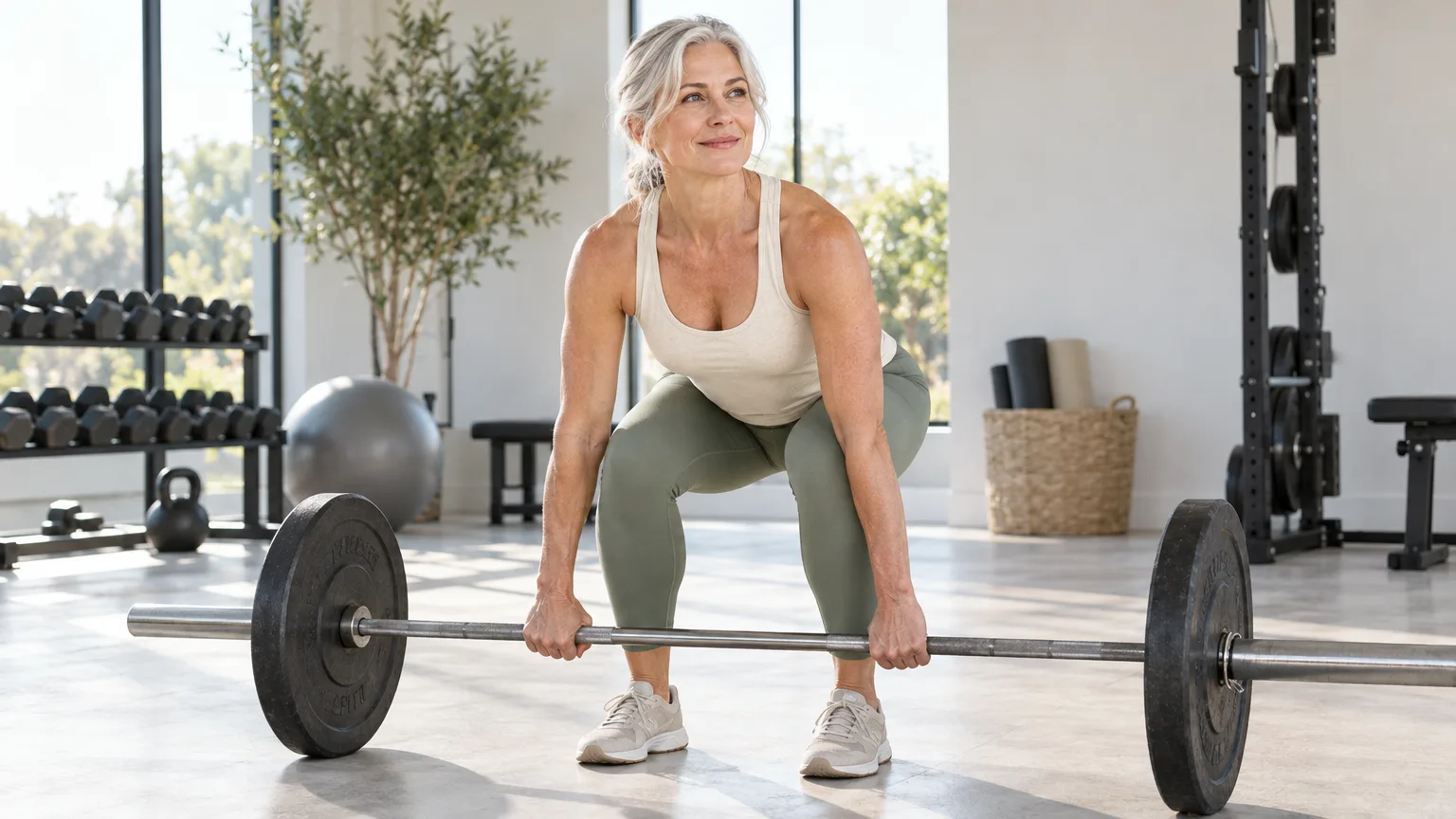
- Train it as a byproduct of real lifting, not grip gadgets. Deadlifts, farmer's carries, rows, and pull-ups all force your hands to hold on, building the muscles researchers measure as a side effect of training the rest of your body — see how much strength training you need each week for a weekly target.
- If you're also losing weight, protect the muscle a calorie deficit puts at risk. Pallas prescribes compounded semaglutide and tirzepatide when a US-licensed clinician decides it's appropriate — see how to keep muscle on a GLP-1 after 50 for the specifics.
Grip strength isn't something to chase as an end in itself — it's a side effect of staying strong overall, and a simple number worth knowing if you're tracking how you're aging beyond what the scale shows.