


Start online and meet your provider
Step
1
Answer a few questions, then use your own recent lab results or book a blood draw. A clinician reviews both and meets you on one live video visit.

Men's health · Low testosterone
Prescribed for low testosterone confirmed by blood work. Raises testosterone with a regular injection.
Starting at
$130 per month
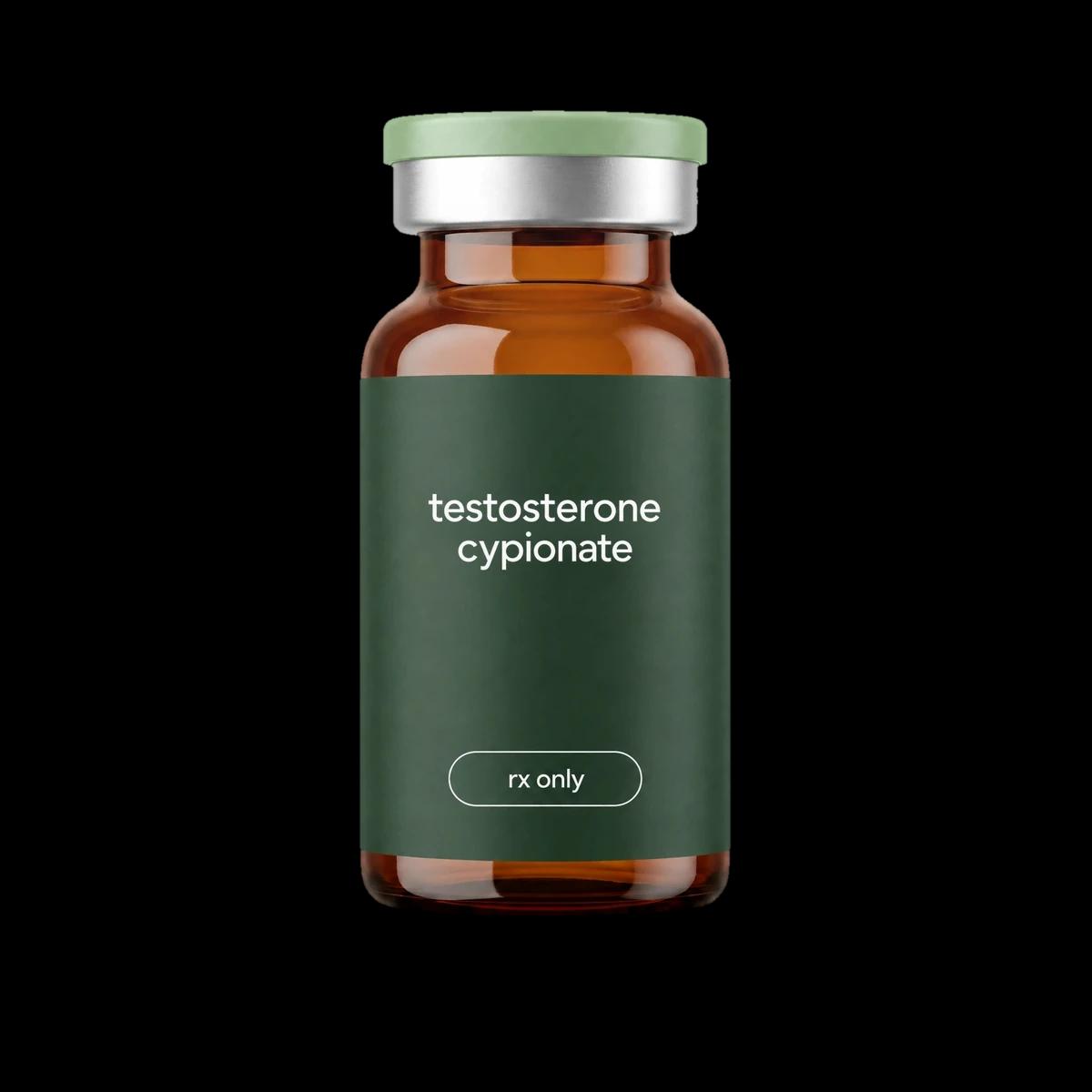
Testosterone cypionate is testosterone in an injectable form, prescribed for low testosterone confirmed by blood tests. It replaces the testosterone your body is not making and raises it to a normal range. Low testosterone can cause low sex drive, trouble with erections, less muscle and strength, more body fat and low mood. One plan price covers your clinician, ongoing check-ins, care-team messaging and your medication, shipped free and discreet.
Testosterone in an injectable form, prescribed for low testosterone confirmed by blood tests. It raises testosterone to a normal range.
Charged once a clinician prescribes: $390 every 12 weeks ($130/mo) or $150 every 4 weeks. Cancel anytime. Labs are separate.
Complete a short intake and get your labs done. A US-licensed clinician reviews both and, if appropriate, prescribes.
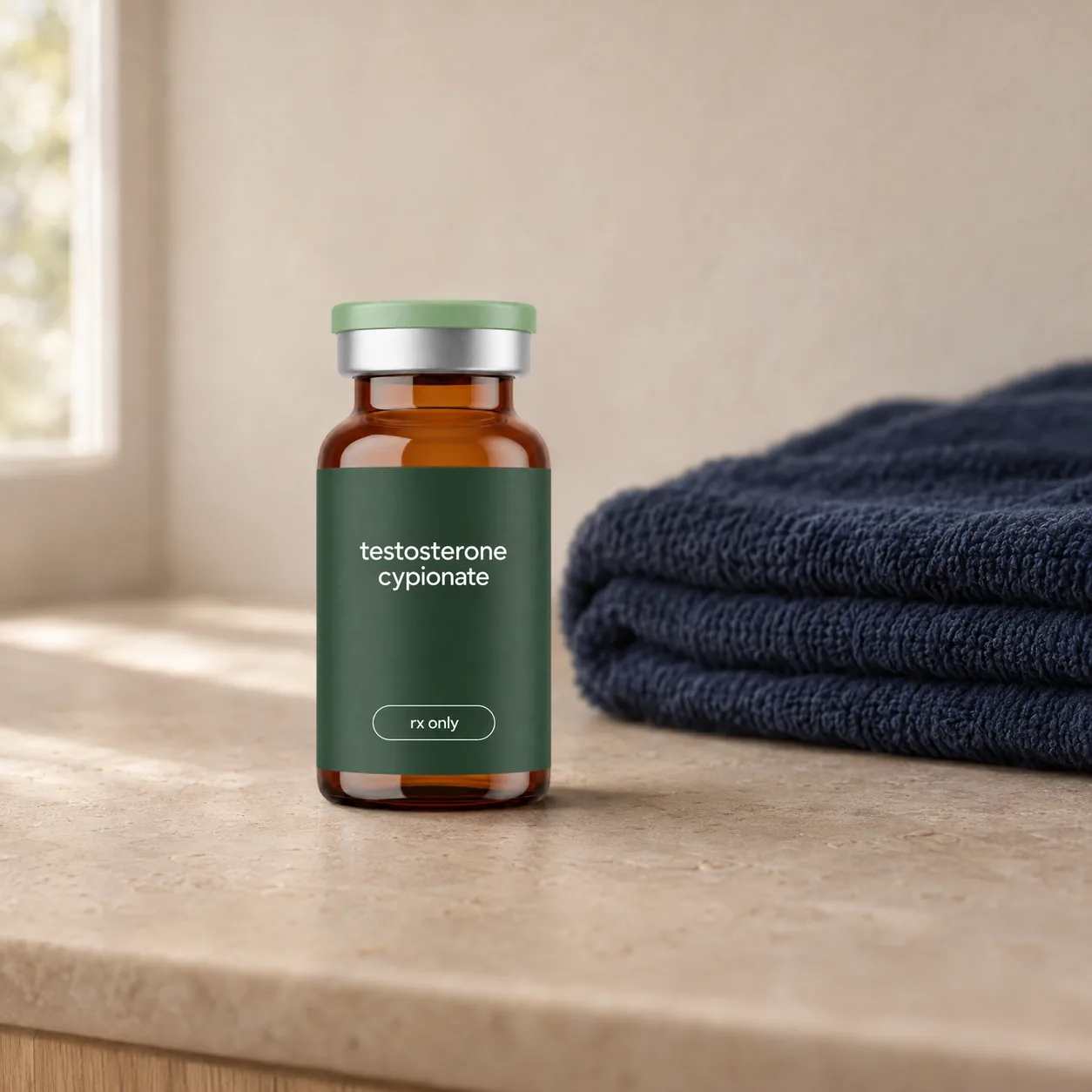
What is testosterone cypionate
Testosterone cypionate is testosterone in an injectable form. Testosterone injection is used to treat low testosterone, and it works by replacing the testosterone the body is not making1. Low testosterone is diagnosed from symptoms together with morning blood tests, repeated to confirm2. Those symptoms can include low sex drive, trouble with erections, less muscle and strength, more body fat and low mood3. The FDA has approved testosterone only for low testosterone that comes with an associated medical condition4.
Treatment has benefits and risks, which is what the labs and the clinician's review are for. Most of the trials cited on this page tested a testosterone gel in men aged 45 and older.
What the research says
The Testosterone Trials gave 790 men aged 65 and older with low testosterone a testosterone gel or a placebo gel for a year. Sexual desire, sexual activity and erectile function all improved more on testosterone5. A later trial in 1,161 men aged 45 to 80 with low libido found more sexual activity and desire over two years, but no improvement in erectile function over placebo6. The effects were moderate at most, the men were chosen for low libido, and both trials used a gel, so results at other ages and with other forms may differ.
The part of the Testosterone Trials built to test vitality missed its main goal: fatigue scores did not improve more than on placebo, though mood improved slightly and depressive symptoms eased slightly5. In the largest trial since, mood and energy improved slightly more on testosterone than on placebo10. Every gain was small, and none was shown in men with a diagnosed depressive disorder. Testosterone is not a treatment for depression.
Pooled analyses of placebo-controlled trials found testosterone therapy increased lean body mass by about 1.2 to 1.6 kg7,8. Body fat fell by about 1.6 kg in one analysis8; in the one limited to men with low testosterone, the drop did not reach significance7. Body weight did not change in either. In trials of men 45 and older, injected testosterone increased measured strength by 10% to 13% over placebo9. Those trials did not require a diagnosis of low testosterone, an earlier pooled analysis found mixed effects on strength8, and the part of the Testosterone Trials built to test walking distance missed its main goal5. Lean mass on a scan is not the same as strength, or as size you can see.
Trouble concentrating is one of the symptoms of low testosterone3, but treatment has not been shown to help it: in a year-long trial, testosterone did not improve memory or other measures of thinking11.
The largest safety trial followed 5,246 men aged 45 to 80 with low testosterone and heart disease or a high risk of it. Heart attack, stroke and cardiovascular death were no more common on testosterone gel than on placebo (7.0% against 7.3%); atrial fibrillation, acute kidney injury and blood clots in the lungs were more common on testosterone12. That trial tested a gel, not an injection, and ran for about two years. Testosterone can raise blood pressure, and every testosterone label now carries that warning13.
Why men start
Results vary and are not guaranteed.
Labs
Low testosterone is diagnosed with blood tests, so a clinician needs your results before prescribing. The panel covers your testosterone, the hormones that drive it, and the safety markers your clinician watches, including red blood cell count and PSA. There are three ways to get it done.
Your own resultsNo charge
Blood work from the last 30 days, with your name and the date showing. Upload it after checkout.

In-person draw$100
At a lab near you. Not offered in Hawaii or Rhode Island.

At-home draw$190
A phlebotomist comes to you. Availability depends on your location.
Using your own results? Ask your doctor for this list. A draw is charged when you order it, and the results are yours whether or not a clinician prescribes. Before a renewal your clinician may ask for a follow-up panel, the same list without prolactin and vitamin D: $80 in person, $160 at home, or your own results again.
Answer a few questions, then use your own recent lab results or book a blood draw. A clinician reviews both and meets you on one live video visit.
If prescribed, a pharmacy fills your medication and ships it to you, free and discreet.

We stay with you the whole way, with regular check-ins, follow-up blood tests and on-demand messaging with your care team.

Pharmacy & safety
Your medication is filled once it's prescribed, then shipped to your door.
Testosterone in an injectable form, prescribed for low testosterone confirmed by blood tests. It raises testosterone to a normal range.
Charged once a clinician prescribes: $390 every 12 weeks ($130/mo) or $150 every 4 weeks. Cancel anytime. Labs are separate.
Complete a short intake and get your labs done. A US-licensed clinician reviews both and, if appropriate, prescribes.
It raises testosterone to a normal range. In trials, testosterone therapy increased sex drive and sexual activity and modestly improved mood. Energy and erections improved little or not at all.
Low sex drive, trouble with erections, less muscle and strength, more body fat, low mood and trouble concentrating. Other conditions cause the same symptoms, so a blood test comes first.
On a regular schedule your clinician sets. Follow the directions on your prescription label for the dose and how to inject it; your care team is a message away.
Yes. Testosterone in every form lowers sperm production and can shrink the testes while you take it. After stopping testosterone, sperm counts can take months to recover, and may not.
It has risks your clinician weighs. Testosterone can raise red blood cell counts and blood pressure, and it is not prescribed to men with prostate or breast cancer. Follow-up labs track blood count and PSA.
Yes. Testosterone is a Schedule III controlled substance: it takes a photo ID and a live video visit, refills can't ship early, and delivery may need a signature.
Yes. A clinician meets you on one live video visit before prescribing testosterone, in every state. You book it once your labs and photo ID are in.
Yes. A clinician needs blood test results before prescribing. Upload your own from the last 30 days, or book a draw: $100 at a lab or $190 at home, charged when you order it.
Men with symptoms and low testosterone on blood tests. FDA-approved testosterone products are approved only for men whose low testosterone comes with an associated medical condition.
A US-licensed pharmacy fills and ships it. Whether a fill is a commercial product or a compounded one is decided per prescription, and compounded preparations are not FDA-approved.
Guides
More options
See every option Pallas offers for low testosterone, how the labs work and what treatment involves. The options share one intake.
See every optionFrom $130 per month
The symptom and class facts on this page are from MedlinePlus and the Endocrine Society's guideline. The trials cited tested FDA-approved testosterone products, mostly one gel in men aged 45 and older with low testosterone. The strength figure comes from trials of injected testosterone, which did not require a diagnosis of low testosterone; the lean-mass figures pool trials of several forms. They describe how testosterone therapy works in general and are not evidence that this injection will produce the same or any particular result for you. Cash-pay only; not billed to insurance.